
 By Miljan Radovanovic
Travellers often linger in Munich because of its beer halls, museums and parks, yet some of Bavaria’s most rewarding experiences lie just outside the city limits.
Spending a day on a lake shore, visiting a UNESCO‑listed old town or walking through Alpine peaks offers fresh perspectives on Bavarian culture and history.
These day trips can be reached by S‑Bahn or regional trains, and they reveal why locals escape the city whenever they can.
The following sections share some of the best excursions, using real observations and verified facts rather than hype, so you can decide where to explore next.
Waterside escapes and cultural detours
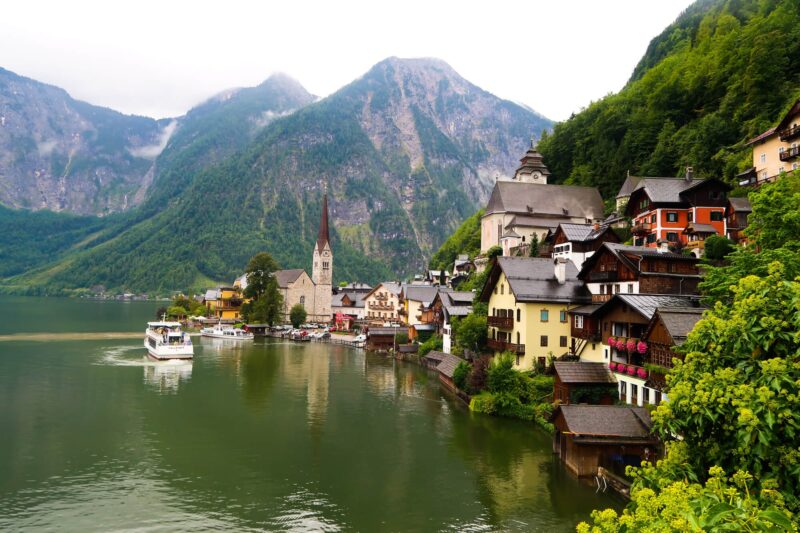
- Lake Starnberg: Glacial lake with boat tours and Rose Island.
- Andechs Monastery: Pilgrimage site serving monk‑brewed beer.
- Freising: Oldest Bavarian town with Weihenstephan Brewery.
South of Munich, Lake Starnberg was formed by a glacial melt 18,000 to 20,000 years ago. Today the S6 train from Munich arrives in under an hour, and visitors stroll along promenades, hire bikes to ride the 50‑kilometre circuit and take boat tours past grand villas and the Possenhofen Castle where Empress Sisi grew up.
On the lake’s western shore lies the votive chapel marking the site where King Ludwig II’s body was found; a path leads on to Rose Island, an idyllic spot where he met Sisi.
Nearby Andechs Monastery draws pilgrims with its Baroque church and beer brewed by monks for over 500 years.
A hike from Herrsching provides a satisfying climb, while a bus offers an easier return after sampling the monastery’s strong Doppelbock Dunkel and lighter Weissbier.
Freising, Bavaria’s oldest town founded in 739, combines Romanesque architecture with Asam brothers’ Baroque flourishes and hosts the Weihenstephan Brewery, which started as a monastery brewery nearly a thousand years ago and is considered the world’s oldest.
Exploring its hilltop gardens and tasting the brewery’s beer overlooking the Alps makes for a rewarding detour. If you need a companion for these tours or a night out München escort service is a normal occurrence in Munich to try out.
History and UNESCO‑listed towns
Bavaria’s complex history is visible in nearby towns. The Dachau Concentration Camp Memorial Site, accessible via the S2 S‑Bahn, documents the suffering of more than 204,000 prisoners and the deaths of at least 41,500 people during the Nazi regime.
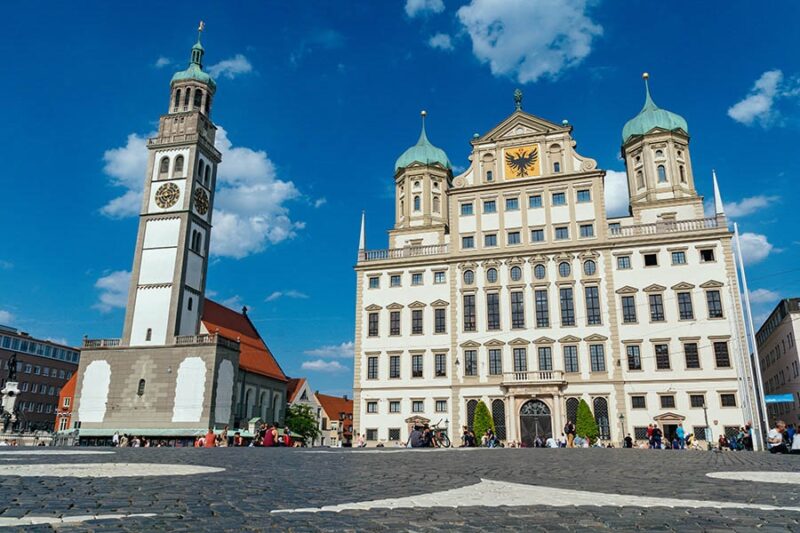
Walking through the barracks, gas chamber and museum is a sombre experience that underscores why preserving memory matters. Bamberg, a UNESCO World Heritage site, grew from a bishopric founded by Emperor Henry II in 1007 and was envisioned as a “second Rome”.
Its Old Town Hall appears to float on an island in the Regnitz River; legend says the bishop refused the townspeople land, so they drove stakes into the river and painted trompe‑l’oeil frescoes whose cherub leg protrudes from the wall.
Nuremberg’s Imperial Castle looms over the city. From 1050 onward it hosted imperial diets, stored the imperial regalia and symbolised the Holy Roman Empire’s power. Visiting these sites provides insight into Bavarian politics and art beyond Munich.
| Destination | Key highlight | Importance |
| Dachau | Memorial with barracks, museum and remembrance events | Educates about Nazi history |
| Bamberg | Old Town Hall built on river stakes; medieval plan | UNESCO town with Enlightenment roots |
| Nuremberg | Imperial Castle hosting imperial diets | Symbol of Holy Roman Empire |
Did you know? Bamberg became an Enlightenment centre in the late 18th century and influenced northern Germany and Hungary with its architecture and philosophy.
Alpine adventures and pristine lakes
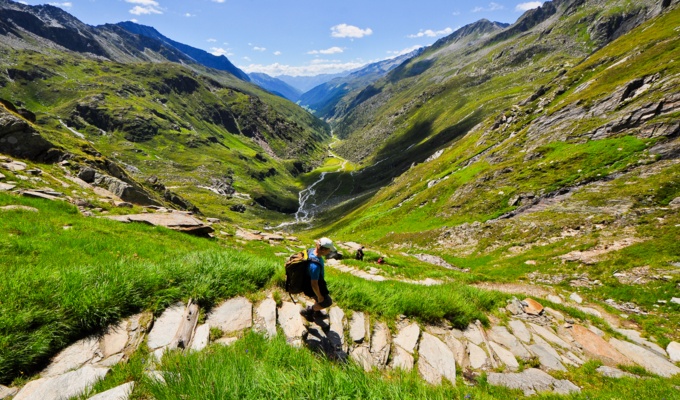
- Zugspitze: Cable cars and cogwheel train access the summit, offering views over four countries.
- Königssee: Electric boat trip to St Bartholomä and Röthbachfall.
- Eagle’s Nest: Former Nazi tea house turned mountaintop restaurant.
If mountains call, the Zugspitze and Berchtesgaden region deliver. Germany’s highest peak, the 2,962‑metre Zugspitze, can be reached via a record‑holding cable car, a century‑old cogwheel train and a connecting glacier lift. From the summit’s golden cross you gaze over four countries and 400 peaks, or visit the glacier for year‑round skiing.
To the east, Berchtesgaden’s Königssee is an eight‑kilometre fjord‑like lake. Electric boats glide past sheer cliffs while a flugelhorn player demonstrates the lake’s echo before docking at the onion‑domed pilgrimage church of St Bartholomä.
A further stop at Salet opens up a trail to the Obersee and Röthbachfall, Germany’s highest waterfall. Above Berchtesgaden, the Kehlsteinhaus (Eagle’s Nest) sits at 1,820 metres. Built by the Nazi Party for Hitler’s 50th birthday, it now houses a restaurant with panoramic views; a special bus climbs the steep road, and visitors traverse a 124‑metre tunnel and take a brass elevator to the top.
Royal castles and palaces
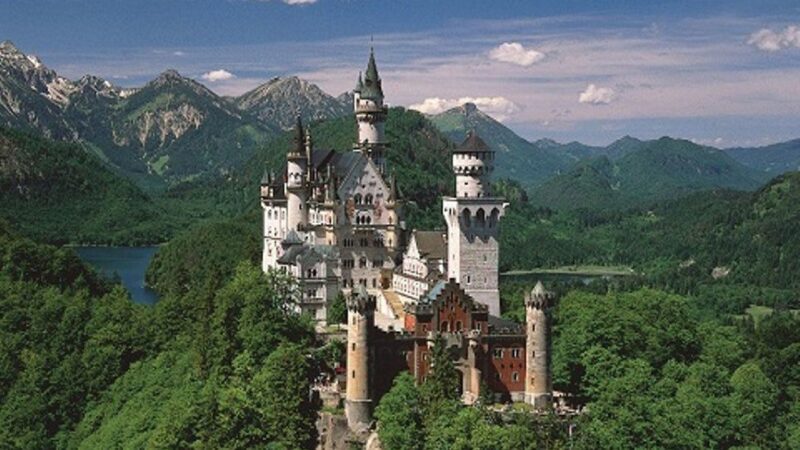
King Ludwig II’s passion for architecture left Bavaria with three unique palaces. Neuschwanstein Castle, begun in 1869 on the ruins of earlier fortresses, was still incomplete when the king died in 1886.
It opened to visitors just six weeks later and now welcomes around 1.5 million people annually. The limestone came from a nearby quarry, and Ludwig oversaw construction from the gatehouse.
Linderhof Palace, completed in 1878, is the only project he saw finished. It combines a Baroque exterior and Rococo interiors with South German influences and sits within terraced gardens and a cascade.
The park includes exotic follies such as the Moorish Kiosk and an artificial grotto lit by early electrical lights inspired by Wagner’s Tannhäuser. Herrenchiemsee Palace, built on Herreninsel island from 1878, was Ludwig’s attempt to replicate Versailles.
Designed by architect Georg von Dollmann, it features a Hall of Mirrors, marble staircase and elaborate fountains, yet remained unfinished after Ludwig’s death in 1886. These sites illustrate Ludwig’s obsession with French kingship and his lasting impact on Bavarian tourism.
A Hall of Mirrors is a long gallery with mirrors along one wall and windows on the other, creating a dazzling effect; Herrenchiemsee’s hall was modelled after Versailles.
Character‑filled towns
- Regensburg: Preserved medieval city and former Perpetual Diet host.
- Rothenburg ob der Tauber: Walled town with night‑watchman tours and 13th‑century status as a Free Imperial City.
While Munich has charm, nearby towns provide different moods. Regensburg, a former Roman camp on the Danube, rose to prominence as a trading hub and hosted the Perpetual Diet – Germany’s permanent parliament – during the 17th century.
Because it was spared bombing in World War II, its narrow lanes, stone bridge and St Peter’s Cathedral are remarkably intact, earning it the nickname “the Manhattan of the Middle Ages”.
Rothenburg ob der Tauber exemplifies a walled medieval town; it became a Free Imperial City in 1274 and retains its fortifications, half‑timbered houses and cobbled lanes. Evening night‑watchman tours tell stories of sieges and legends, while shops sell traditional Schneeballen pastries.
These towns show how leaving Munich reveals layers of history and local flavour that can’t be replicated within the city.
Conclusion
Munich is a vibrant city, yet its surroundings offer richer slices of Bavarian nature, culture and history.
From glacial lakes and pilgrimage breweries to Alpine summits and UNESCO towns, these day trips reveal why locals hop on an S‑Bahn or regional train for a change of scenery.
Also read: Best Theaters in Munich
Exploring the sombre history of Dachau or the whimsical palaces of King Ludwig II deepens understanding of Bavaria’s past, while strolling through Regensburg or Bamberg demonstrates how medieval streets continue to thrive.
Whether you’re interested in hiking, history or simply escaping urban crowds, the region around Munich provides experiences that rival, and often surpass the pleasures of staying in the city.